
Inside Asia's Solo Economy: What Single-Person Households Actually Buy
Single-person households now make up more than 42% of households in South Korea and a quarter in China, with Southeast Asia the fastest-growing segment. New data shows what solo consumers spend on, and what it means for CPG portfolio strategy.

South Korea's single-person households climbed past 10 million in 2025, accounting for 42.3% of all households nationwide, according to Ministry of the Interior and Safety data reported in August 2026, up from 9.72 million the previous year. Statistics Korea, using a stricter methodology, puts the 2024 figure at 36.1%, or 8.05 million households. Either measure places single-person households as the country's single largest household type, a shift playing out with variations across much of East and Southeast Asia and steadily reshaping how CPG brands need to think about pack size, portion format and product design.
China's 2020 census recorded 125 million people living alone, roughly one in four households nationwide, alongside a steep decline in marriages, which fell 20% to a record low of 6.1 million in 2024, less than half the figure recorded in 2013. Spending by single Chinese consumers surpassed $1 trillion in 2025, up roughly 50% over two years, according to Chinese research firm Discovery Reports, while the country's broader "silver economy" serving its aging population is projected to reach 30 trillion yuan (approximately $4 trillion) by 2035.
Southeast Asia is following a similar trajectory, though from a smaller base. Solo households currently account for about 12% of homes across the region and are growing at a 2.4% compound annual rate through 2030, the fastest-growing household segment tracked in the region, according to SYNC Southeast Asia research. In Indonesia, the number of couples marrying fell from 2.01 million in 2018 to 1.58 million in 2023, a trend consistent with delayed marriage patterns observed elsewhere in the region.
What solo households actually spend on
The category effects of solo living extend well beyond smaller grocery baskets. In Japan, single-person households have historically spent between 1.5 and 3.5 times more than multi-person households on digital content such as streaming video, music and e-books, reflecting more discretionary time and spending capacity per person rather than per household. In South Korea, pet ownership has risen 60% over the past decade, a trend widely linked to the growth of single-person households seeking companionship and routine. Collectible and character goods have also benefited: Pop Mart, the Chinese toymaker behind the Labubu franchise, reported $5.4 billion in revenue in its most recent fiscal year, up 185%, a category increasingly associated with solo, self-directed spending on small, frequent indulgences.
Loneliness and solo living are not the same thing
Commentary on Asia's rising solo household numbers often conflates living alone with social isolation, a distinction that matters for how brands position products aimed at this segment. Roughly half of South Koreans living alone report feeling lonely at least occasionally, which means roughly half do not, and people in larger households can feel isolated as well. Brands that read shrinking household size purely as an isolation signal risk misjudging what solo consumers actually want, which in many cases is convenience, autonomy and control over how they spend their time and money, not compensation for missing companionship.
For CPG brands, the structural shift toward single-person households across Korea, China and increasingly Southeast Asia has direct implications for portion sizing, packaging formats and product positioning, from smaller grocery and meal formats to premium single-serve indulgences. The data suggests solo consumers are not simply a shrunken version of the family household basket; they represent a distinct spending pattern built around convenience-driven essentials paired with selective, higher-margin indulgences in categories such as pets, collectibles and digital content.
Sources: UPI / Asia Today, "Single-person households reach 42.3% in South Korea," August 25, 2026. Asia Times, "Asia's lonely economy of one," September 2026. Blueprint.vc, "The solo economy: Your mother's greatest lamentation or is it?" Korea Times / McKinsey Global Institute, "Going it alone: The rise of Asia's solo economy." Statistics Korea, 2024 household survey, via Brunch, December 2025.
Last updated 24 Sept 2026, 06:29
About the author
Sarah Lim
Correspondent, Asia
Sarah leads CPG coverage of brand launches, expansion strategies, consumer trends, retail distribution, marketing and the evolving ways brands connect with Asian shoppers.
Related coverage
Why Asian Consumers Are Trading Down and Splurging at the Same Time
Asian consumers are trading down on everyday purchases while splurging selectively on products tied to identity and cultural moments. New data on premiumization, inflation and generational spending patterns shows why a single pricing strategy no longer works across a CPG portfolio.
Why Asia's Zero-Alcohol Boom Looks Nothing Like a Single Regional Trend
Japan's non-alcoholic beer market is the world's second-largest, built on a 2007 drink-driving law and decades of brewer investment. China and Vietnam are following entirely different paths, shaped by cost, taxi availability and strict enforcement rather than a shared regional health trend.
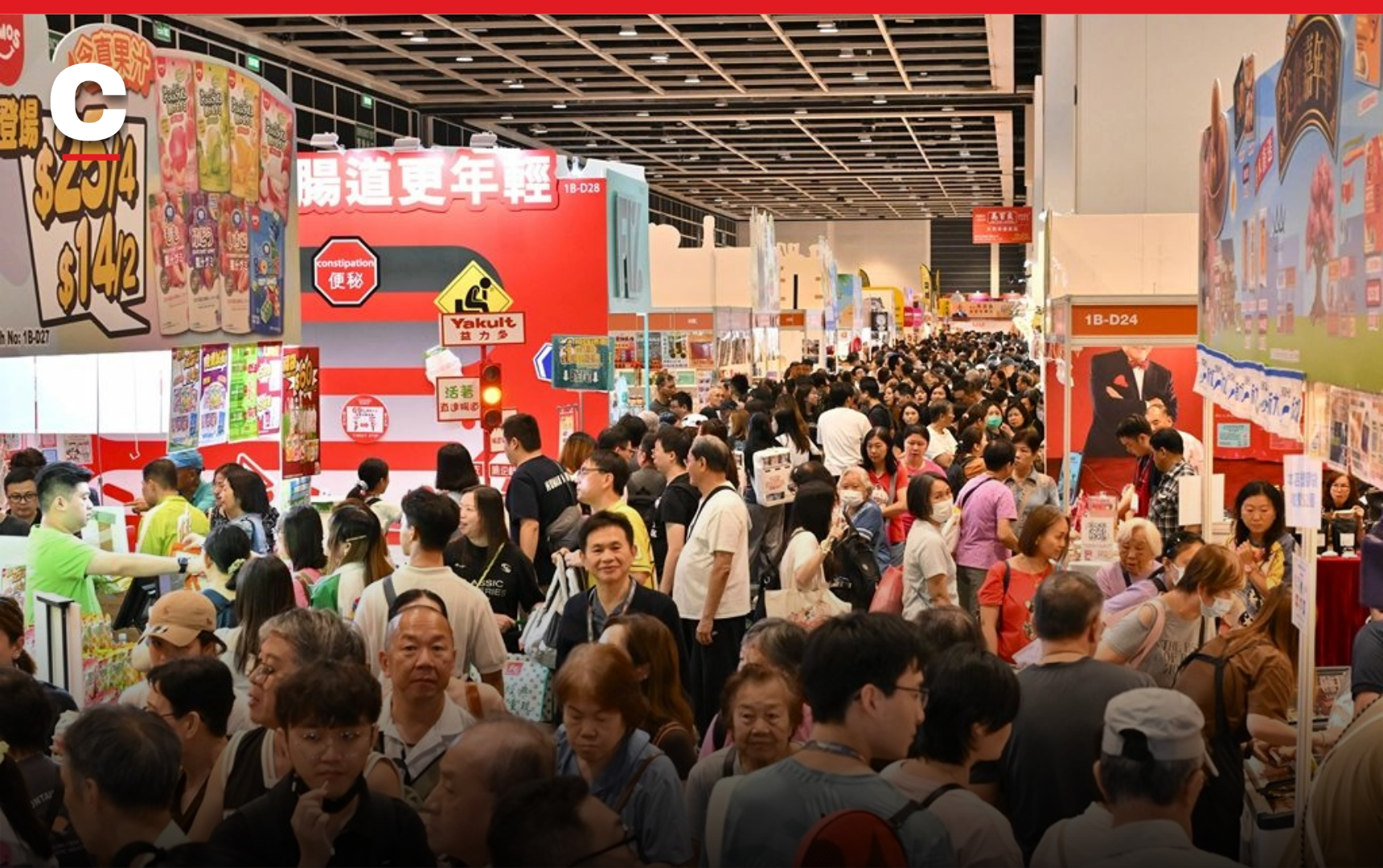
HKTDC Food Expo 2026 Opens in Hong Kong, Positions City as F&B Hub
The 36th HKTDC Food Expo opened in Hong Kong on August 13, running alongside the Beauty & Wellness Expo, Home Delights Expo and an expanded Hong Kong International Tea Fair, as the city positions itself as a regional F&B trading hub connecting global brands with Mainland China and Asian markets.