
Why Asia's Zero-Alcohol Boom Looks Nothing Like a Single Regional Trend
Japan's non-alcoholic beer market is the world's second-largest, built on a 2007 drink-driving law and decades of brewer investment, while China and Vietnam are following entirely different paths shaped by cost and enforcement.
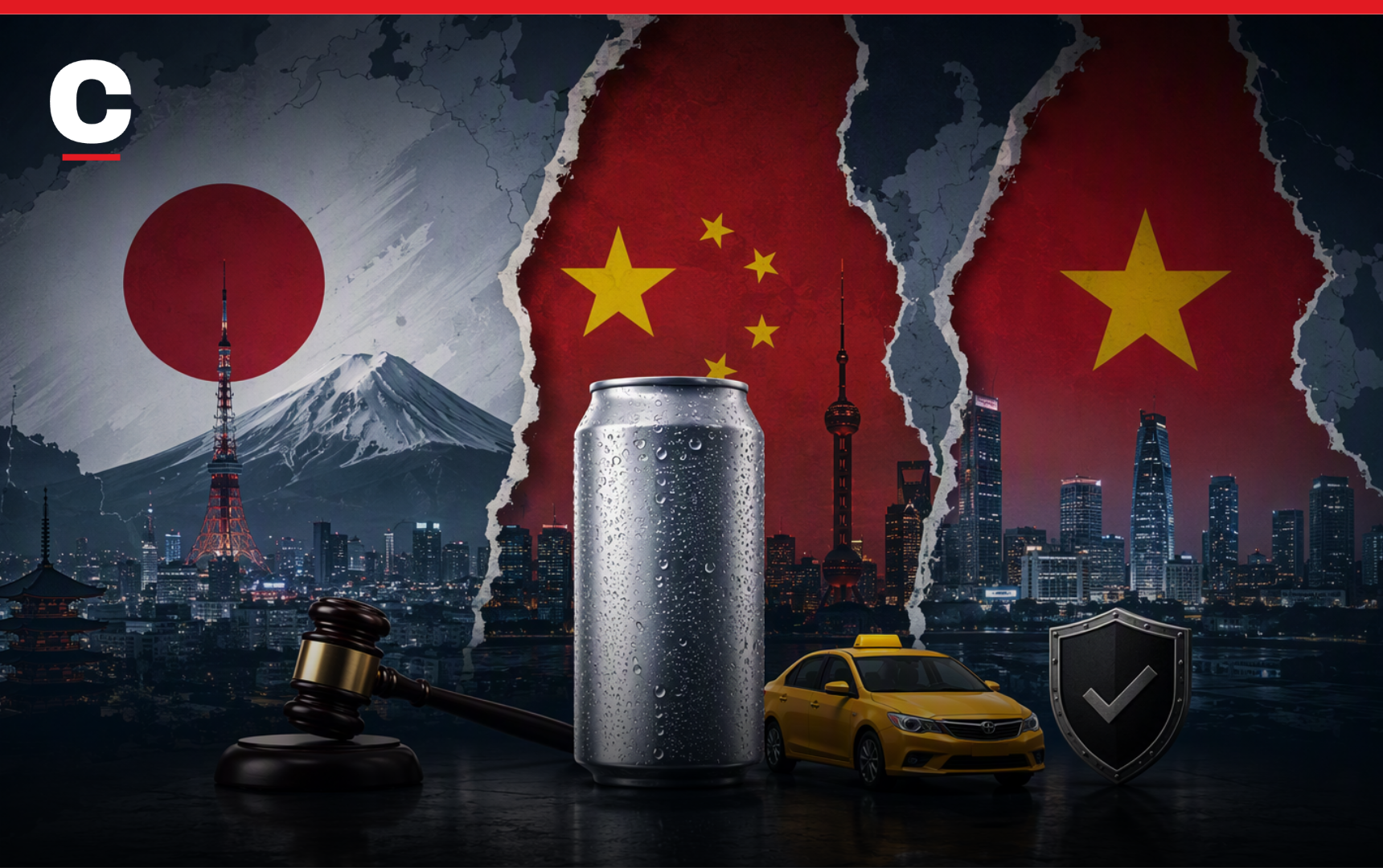
Japan consumed more than 3 million hectolitres of non-alcoholic beer in 2023, up more than 20% since 2018, making it the world's second-largest non-alcoholic beer market after Germany, according to GlobalData research cited by trade publication Just Drinks. Yet just across the region, China's non-alcoholic beer production reached only 235,340 hectolitres in the same year, a fraction of Japan's volume despite China's far larger overall beer market. The gap illustrates a central fact about Asia's zero-alcohol trend: it is not one regional story, but several distinct national ones, each shaped by different regulation, culture and cost structures.
Japan's non-alcoholic beer category took root well before the format gained traction in Western markets, and the shift accelerated sharply after a 2007 revision to the country's Road Traffic Act introduced stricter penalties for drink driving, according to a spokesperson for Asahi Group Holdings. The regulatory change created sustained demand for legal alternatives in social settings where people wanted to drink but could not, a dynamic distinct from the primarily health-driven zero-alcohol trend seen in markets like the United States and United Kingdom.
Asahi's non-alcohol beverage sales in Japan reached a record 42.8 billion yen (approximately $289 million) in 2023, an increase of roughly 70% year-over-year, and the company has stated a target of reaching a 20% sales composition ratio for no- and low-alcohol beverages across its major beverage products by 2030. Rival Japanese brewers Kirin, Sapporo and Suntory have all built out non-alcoholic portfolios well ahead of most regional peers, giving Japan's domestic brewers a structural head start that foreign entrants have struggled to match; Heineken's 0.0% product only entered the Japanese market in 2022, becoming the first foreign non-alcoholic beer brand to do so.
Why China and Vietnam are following different paths
According to the same Asahi spokesperson, cost remains the decisive factor limiting non-alcoholic beer adoption in China, where the category is still in an early growth stage compared with Japan's two-decade head start. A further complicating factor specific to China is the ready availability of affordable taxis, which reduces the practical need for non-alcoholic alternatives among drivers who might otherwise seek a legal way to continue drinking socially.
Vietnam presents a different regulatory driver. The country's Decree 100, which criminalizes any alcohol consumption before driving regardless of blood alcohol level, has pushed consumers toward smaller pack formats and lower-alcohol choices rather than full-strength beer, according to Mordor Intelligence's analysis of the Asia Pacific beer market. Unlike Japan's gradual, decades-long build-out of dedicated non-alcoholic brand lines, Vietnam's shift appears more immediate and enforcement-driven.
Most of the region's alcohol industry has not caught up
Despite pockets of rapid growth, more than half, 52%, of alcohol companies assessed across Asia-Pacific show no evidence of having introduced non-alcoholic alternatives to their product portfolios, according to Sustainalytics research. Most of these companies are China-based distillers selling high-end, traditionally produced spirits, a category where the shift toward zero-alcohol formats has been slower than in beer specifically. Asahi stands out in Sustainalytics' assessment as the only Asia-Pacific company rated as having a very strong non- and low-alcohol program.
For CPG and beverage companies, Asia's zero-alcohol trend cannot be approached with a single regional playbook. Japan rewards brands with established non-alcoholic sub-brands and decades of formulation experience competing on taste parity with full-strength beer. Vietnam rewards smaller formats and lower-alcohol options that respond directly to strict drink-driving enforcement. China, for now, remains constrained primarily by cost and the low practical necessity created by cheap, widely available taxi alternatives, suggesting the category's growth there will likely depend more on shifting health narratives among younger, urban consumers than on regulatory pressure alone.
Sources: Just Drinks, "Why has non-alcoholic beer taken root in some countries faster than others?" Just Drinks, "Japan's brewers have home advantage in alcohol-free." Mordor Intelligence, "Asia-Pacific Beer Market Size & Share Analysis." Sustainalytics, "Tapping Into the Rise of No- and Low-Alcohol: Opportunities and Risks for Beer, Wine, and Spirits Companies."
Last updated 21 Sept 2026, 09:31
About the author
Sarah Lim
Correspondent, Asia
Sarah leads CPG coverage of brand launches, expansion strategies, consumer trends, retail distribution, marketing and the evolving ways brands connect with Asian shoppers.
Related coverage

Why Asian Consumers Are Trading Down and Splurging at the Same Time
Asian consumers are trading down on everyday purchases while splurging selectively on products tied to identity and cultural moments. New data on premiumization, inflation and generational spending patterns shows why a single pricing strategy no longer works across a CPG portfolio.

Inside Asia's Solo Economy: What Single-Person Households Actually Buy
Single-person households now make up more than 42% of all households in South Korea and a quarter in China, with Southeast Asia the fastest-growing segment in the region. New data shows what solo consumers actually spend on, and why CPG brands need a distinct strategy for this segment.
HKTDC Food Expo 2026 Opens in Hong Kong, Positions City as F&B Hub
The 36th HKTDC Food Expo opened in Hong Kong on August 13, running alongside the Beauty & Wellness Expo, Home Delights Expo and an expanded Hong Kong International Tea Fair, as the city positions itself as a regional F&B trading hub connecting global brands with Mainland China and Asian markets.